Wer's noch nicht getan hat trotzdem weiter mitzeichnen ....

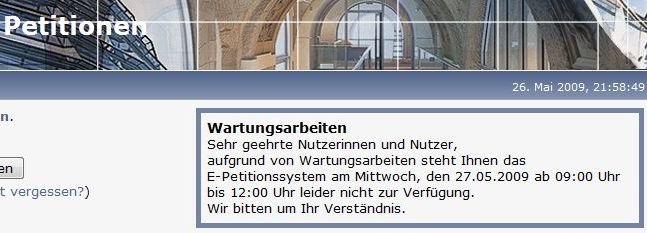
Offensichtlich geht das 'mitzeichnen' nur noch bis morgen Vormittag - Grund:
nichts ist so, wie es zu sein scheint ....
Wer's noch nicht getan hat trotzdem weiter mitzeichnen ....
Offensichtlich geht das 'mitzeichnen' nur noch bis morgen Vormittag - Grund:
Nachdem die Stellungnahmen der bisher benannten Beteiligten im Internet verfügbar sind habe ich mich daran gemacht sie sämtlich zu lesen - 'zu lesen' bedeutet: Von Anfang bis Ende, einschließlich etwaiger Verweise (Links) auf frühere Stellungnahmen ....
Das hat zwar Zeit gekostet, war aber sehr aufschlußreich. Die Fachverbände und Fachgutachter (Internet & Recht) stellen im wesentlichen das als änderungsbedürftig und 'mit der heißen Nadel gestickt' dar, was von den 'Aktivisten' angeprangert wird. Ich schenke mir eine Wiederholung, die Argumente sind bekannt. Hier eine kurze Charakterisierung:
BITKOM [Ablehnung - mit Vorschlägen zur Verbesserung in technischer und rechtlicher Sicht.]
DIHK [Kurze, präzise und sachkundige Darstellung der Mängel des Gesetzentwurfes aus Sicht der Durchführbarkeit und Struktur.]
ECO [weist - mit außerordentlichem Befremden (!) - auf Diskrepanzen zwischen den bei den früheren Verhandlungen festgelegten Regelungen und dann dazu völlig unterschiedlich festgeschriebenen Maßnahmen und Vorgaben des vorliegenden Textes hin.]
Dr. Korinna Kuhnen [Informierte, aber super vorsichtig ausgedrückte Infragestellung von Teilen des Gesetzesvorhabens; ich glaube zwischen den Zeilen eine Ablehnung zu erkennen, die aber wohl aus Vorsicht (mit dem Gedanken an die weitere Karriere?) nicht explizit zum Ausdruck kommt]
Dr. Dieter Frey [Klar abschmetternde rechtliche Sicht, verklausuliert werden schlampige Formulierungen und Unwissenheit in einigen Rechtsgebieten erwähnt.]
Wie zu erwarten war gibt es seitens des BKA ein verwaschenes, mit Floskeln ohne jeden Sachbezug gespicktes Geschwurbel. Die bekannten Argumente von WS / UvdL werden wiedergekäut, Das BKA hat eigentlich nur eine Aussage:
Wir wollen alle Rechte aber keinerlei Kontrolle - egal von wem.
Absatzweise - unfreiwillig - erheiternden Charakter hat die Stellungnahme des BDK "Bund(es) Deutscher Kriminalbeamter", deren Tenor ich etwa so beschreibe: "Wir sind willig & überlastet, gebt uns mehr Zeit und schult unsere Mitglieder entsprechend, dann liefern wir auch bessere Ergebnisse".
Prof. Dr. Michael Osterheider, Universität Regensburg [Reines "Gefälligkeitsgutachten" mit selbstbeweihräucherndem Charakter und wenig Substanz.]
Gemeinsame Stellungnahme von UNICEF, Deutsches Kinderhilfswerk, Innocence in Danger, ECPAT, Save the Children und Deutscher Kinderschutzbund [Herzerweichendes Plädoyer - leider werden lediglich Allgemeinplätze wiederholt und es wird an Gefühle appelliert - kein Beitrag 'zur Sache', bar jeden technischen Verständnisses, Aktionismus um jeden Preis.]
| Wenn es also wirklich um die Kinderpornographie geht muß sich aus Sicht der überwiegenden Zahl der Stellungnahmen noch viel, sehr viel ändern ....
Ich bin gespannt, was wir am Ende sehen: Für den letzteren Fall steht dann auch fest was einige der Stellungnehmenden andeuten - es geht nicht um Kinder und deren Schutz sondern um ZENSUR - und für diesen Fall wird auch mitgeteilt, daß man 'höchstrichterliche Klärung' als Folge sieht .... |
vermache ich NICHTS an meine Hinterbliebenen - ich habe nämlich eine bessere Möglichkeit gefunden ...!
(Ein langgehegter Wunsch der Menschheit wird wahr: Zwar hat "das letzte Hemd" immer noch "keine Taschen" - aber dafür gibt es jetzt eine Lösung ....
Die Sache mit dem Passwort/Zugang muß ich allerdings noch klären - werde ich mich daran erinnern?
[via]
könnte man über diese sehr gelungene Seite herzlich lachen ....
(Ich hab trotzdem gelacht, lange und ausdauernd)
Nein, nicht wirklich.
Das ist der, den "pantoffelpunk" (Quelle) für GOTT hält ....
(.... psssst! WIR wissen natürlich daß es sich um unseren - jetzt noch - Innenminister handelt).

kann ich weder sprechen noch lesen - und doch wurde ich durch eine Google-Suche auf ein (Schrift- ?) Zeichen aufmerksam:

Für mich sieht das 'forward'-Zeichen so aus wie ein Strichmännchen das sich anschickt loszulaufen ....
[Bearbeitetes Zitat / Quelle; siehe hierzu auch ]
The Torture 13 exploited the federal bureaucracy to establish a torture régime in two ways. First, they based the enhanced interrogation techniques on techniques used in the U.S. military's Survival, Evasion, Resistance and Escape (SERE) program. The program -- which subjects volunteers from the armed services to simulated hostile capture situations -- trains servicemen and -women to withstand coercion well enough to avoid making false confessions if captured. Two retired SERE psychologists contracted with the government to "reverse-engineer" these techniques to use in detainee interrogations. The Torture 13 also abused the legal review process in the Department of Justice in order to provide permission for torture. The DOJ's Office of Legal Counsel (OLC) played a crucial role. OLC provides interpretations on how laws apply to the executive branch. On issues where the law is unclear, like national security, OLC opinions can set the boundary for "legal" activity for executive branch employees. As Jack Goldsmith, OLC head from 2003 to 2004, explains it, "One consequence of [OLC's] power to interpret the law is the power to bestow on government officials what is effectively an advance pardon for actions taken at the edges of vague criminal statutes." OLC has the power, Goldsmith continues, to dispense "get-out-of-jail-free cards." The Torture 13 exploited this power by collaborating on a series of OLC opinions that repeatedly gave U.S. officials such a "get-out-of-jail-free card" for torturing. Between 9⁄11 and the end of 2002, the Torture 13 decided to torture, then reverse-engineered the techniques, and then crafted the legal cover. Here's who they are and what they did:
| 1. Dick Cheney, vice president (2001−2009) 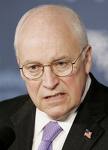 |
On the morning of 9⁄11, .. Dick Cheney (and) David Addington, .. worked together to plot an expansive grab of executive power that they claimed was the correct response to the terrorist threat .. (they) also fought bureaucratically to construct this torture program. Cheney led the way by controlling who got access to President Bush -- and making sure his own views preempted others .. Most shockingly, Cheney is reported to have ordered torture himself, even after interrogators believed detainees were coöperative. Since the 2002 OLC memo known as "Bybee Two" that authorizes torture premises its authorization for torture on the assertion that "the interrogation team is certain that" the detainee "has additional information he refuses to divulge," Cheney appears to have ordered torture that was illegal even under the spurious guidelines of the memo. |
| 2. David Addington, counsel to the vice president (2001−2005), chief of staff to the vice president (2005−2009) 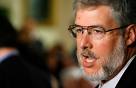 |
David Addington championed the fight to argue that the president -- in his role as commander in chief -- could not be bound by any law, including those prohibiting torture. .. In particular, he ran a "War Council" with Jim Haynes, John Yoo, John Rizzo and Alberto Gonzales .. which crafted and executed many of the legal approaches to the war on terror together .. Addington and Cheney wielded bureaucratic carrots and sticks -- notably by giving .. promotions for lawyers who supported these illegal policies. When Jack Goldsmith withdrew a number of OLC memos because of the legal problems in them, Addington was the sole administration lawyer who defended them. |
| 3. Alberto Gonzales, White House counsel (2001−2005), and attorney general (2005−2008) 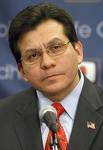 |
As White House counsel, Alberto Gonzales was nominally in charge of representing the president's views on legal issues, including national security issues. In that role, Gonzales wrote and reviewed a number of the legal opinions that attempted to immunize torture .. in a Jan. 25, 2002, opinion .. Gonzales paved the way for exempting al-Qaida detainees from the Geneva Conventions. His memo claimed the "new kind of war" represented by the war against al-Qaida "renders obsolete Geneva's strict limitations on questioning of enemy prisoners." |
| 4. James Mitchell, consultant 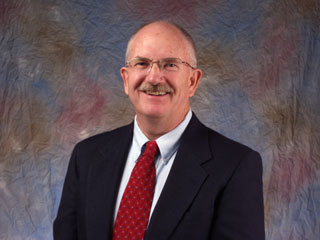 |
.. James Mitchell, a retired military psychologist, had been a leading expert in the military's SERE program. In December 2001, with his partner, Bruce Jessen, Mitchell reverse-engineered SERE techniques to be used to interrogate detainees. Then, in the spring of 2002, before OLC gave official legal approval to torture, Mitchell oversaw Abu Zubaydah's interrogation. An FBI agent on the scene describes Mitchell overseeing the use of "borderline torture." .. Under Mitchell's guidance, interrogators used the waterboard with "far greater frequency than initially indicated" -- a total of 183 times in a month for Khalid Sheikh Mohammed and 83 times in a month for Abu Zubaydah. |
| 5. George Tenet, director of Central Intelligence (1997−2004) 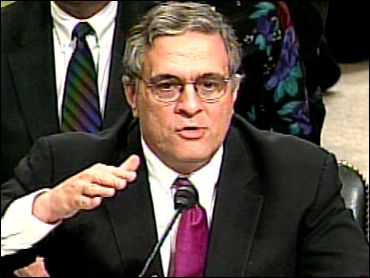 |
.. Published reports say Tenet approved every detail of the interrogation plans: "Any change in the plan -- even if an extra day of a certain treatment was added -- was signed off on by the Director." .. After approval of the harsh techniques, CIA headquarters ordered Abu Zubaydah to be waterboarded even though onsite interrogators believed Zubaydah was "compliant." .. this additional use of the waterboard was clearly illegal according to the memo. |
| 6. Condoleezza Rice, national security advisor (2001−2005), secretary of state (2005−2008) 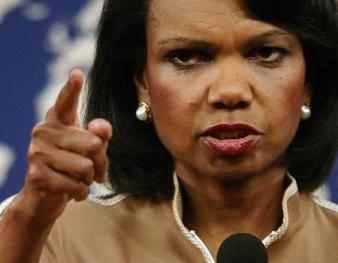 |
.. Rice coördinated much of the administration's internal debate over interrogation policies. She approved (she now says she "conveyed the authorization") for the first known officially sanctioned use of torture .. The approval from the OLC was given orally in late July and in written form on Aug. 1, 2002. Rice's approval or "convey[ance] of authorization" led directly to the intensified torture .. |
| 7. John Yoo, deputy assistant attorney general, OLC / Office of Legal Counsel (2001−2003) 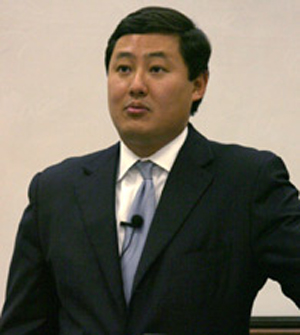 |
As deputy assistant attorney general of OLC focusing on national security for the first year and a half after 9⁄11, Yoo drafted many of the memos that would establish the torture régime, starting with the opinion claiming virtually unlimited power for the president in times of war. In the early months of 2002, he .. (drafted) two key memos authorizing torture: - Bybee One (providing legal cover for torture) and - Bybee Two (describing the techniques that could be used), both dated Aug. 1, 2002. - The .. memos argue that "necessity" or "self-defense" might be used as defenses against prosecution, even though the United Nations Convention Against Torture explicitly states that "no exceptional circumstances whatsoever, whether a state of war or a threat or war ... may be invoked as a justification of torture." .. the techniques the CIA could use in interrogation, was premised on hotly debated assumptions. For example, the .. memo claimed Zubaydah was mentally and physically fit to be waterboarded, even though Zubaydah had had head and recent gunshot injuries. .. In all of his torture memos, Yoo ignored key precedents relating .. to separation of powers. . |
| 8. Jay Bybee, assistant attorney general, Office of Legal Counsel (2001−2003) 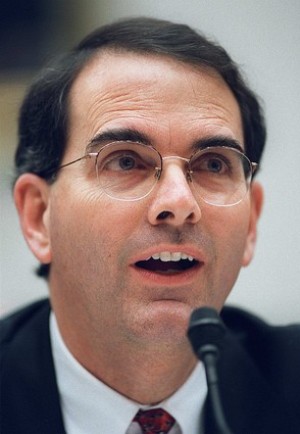 |
As head of the OLC when the first torture memos were approved, Bybee signed the memos named after him that John Yoo drafted. At the time, the White House knew that Bybee wanted an appointment as a Circuit Court judge; after signing his name to memos supporting torture, he received such an appointment. Of particular concern is the timing of Bybee's approval of the torture techniques. He first approved some techniques on July 24, 2002. The next day, Jim Haynes, the Defense Department's general counsel, ordered the SERE unit of DOD to collect information including details on waterboarding. While the record is contradictory on whether Haynes or CIA General Counsel John Rizzo gave that information to OLC, on the day they did so, OLC approved waterboarding. One of the documents in that packet identified these actions as torture, and stated that torture often produced unreliable results |
| 9. William "Jim" Haynes, Defense Department general counsel (2001−2008) 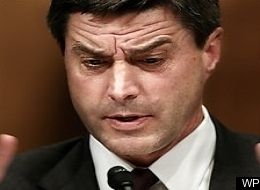 |
As general counsel of the Defense Department, Jim Haynes oversaw the legal analysis of interrogation techniques to be used with military detainees .. Haynes played a key role in making sure some of the techniques were adopted, with little review, by the military. He was thus crucial to the migration of torture to Guantánamo and then Iraq. In September 2002, Haynes participated in a key visit to Guantánamo .. Haynes ignored repeated warnings from within the armed services about the techniques, including statements that the techniques "may violate torture statute" and "cross the line of 'humane' treatment." In October 2002, when the legal counsel for the military's Joint Chiefs of Staff attempted to conduct a thorough legal review of the techniques, Haynes ordered her to stop, because "people were going to see" the objections that some in the military had raised. On Nov. 27, 2002, Haynes recommended that Secretary of Defense Donald Rumsfeld authorize many of the requested techniques, including stress positions, hooding, the removal of clothing, and the use of dogs -- the same techniques that showed up later in the abuse at Abu Ghraib. |
| 10. Donald Rumsfeld, secretary of defense (2001−2006) 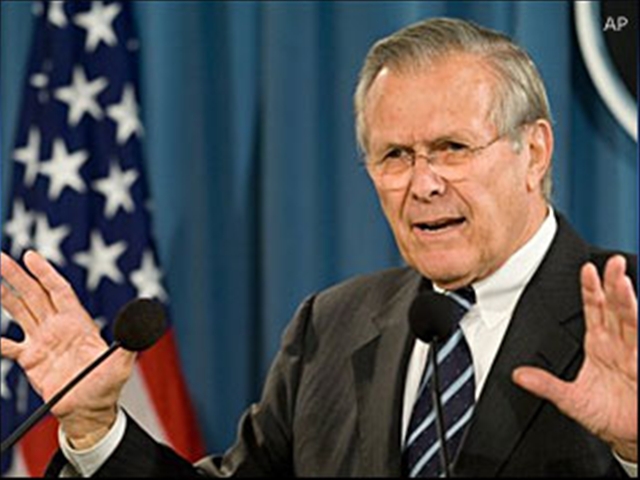 |
As secretary of defense, Rumsfeld signed off on interrogation methods used in the military, notably for Abu Ghraib, Bagram Air Force Base and Guantánamo Bay. With this approval, the use of torture would move from the CIA to the military. A recent bipartisan Senate report concluded that "Secretary of Defense Donald Rumsfeld's authorization of interrogation techniques at Guantánamo Bay was a direct cause of detainee abuse there." Rumsfeld personally approved techniques including the use of phobias (dogs), forced nudity and stress positions on Dec. 2, 2002, signing a one-page memo prepared for him by Haynes. These techniques were among those deemed torture in the Charles Graner case and .. the plan used many of the same techniques .. including sensory deprivation and "sleep adjustment." And through it all, Rumsfeld maintained a disdainful view on these techniques, at one point quipping on a memo approving harsh techniques, "I stand for eight to 10 hours a day. Why is standing limited to four hours?" |
| 11. John Rizzo, CIA deputy general counsel (2002−2004), acting general counsel of the Central Intelligence Agency (2001−2002, 2004-present) 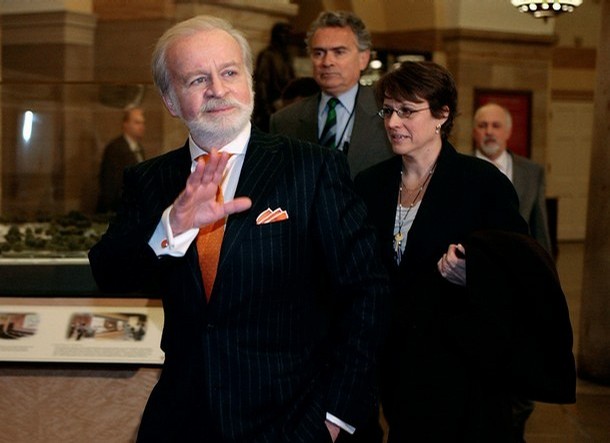 |
As deputy general counsel and then acting general counsel for the CIA, John Rizzo's name appears on all of the known OLC opinions on torture for the CIA .. Rizzo provided a description of waterboarding using one standard, while the OLC opinion described a more moderate standard. Significantly, the description of waterboarding submitted to OLC came from the Defense Department .. Rizzo also provided a document that called enhanced methods "torture" and deemed them unreliable -- yet even with this warning, Rizzo still advocated for the CIA to get permission to use those techniques. |
| 12. Steven Bradbury, principal deputy assistant attorney general, OLC (2004), acting assistant attorney general, OLC (2005−2009) 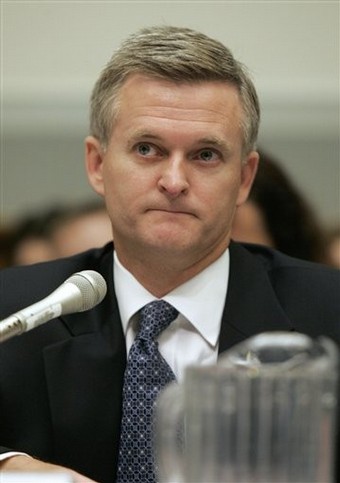 |
In 2004, the CIA's inspector general wrote a report concluding that the CIA's interrogation program might violate the Convention Against Torture. It fell to Acting Assistant Attorney General Steven Bradbury to write three memos in May 2005 that would dismiss the concerns the IG Report raised -- in effect, to affirm the OLC's 2002 memos legitimizing torture. Bradbury's memos noted the ways in which prior torture had exceeded the Bybee Two memo: the 183 uses of the waterboard for Khalid Sheikh Mohammed in one month, the gallon and a half used in waterboarding, the 20 to 30 times a detainee is thrown agains the wall, the 11 days a detainee had been made to stay awake, the extra sessions of waterboarding ordered from CIA headquarters even after local interrogators deemed Abu Zubaydah to be fully compliant. Yet Bradbury does not consider it torture. He notes the CIA's doctors' cautions about the combination of using the waterboard with a physically fatigued detainee, yet in a separate memo approves the use of sleep deprivation and waterboading in tandem. He repeatedly concedes that the CIA's interrogation techniques as actually implemented exceeded the SERE techniques, yet repeatedly points to the connection to SERE to argue the methods must be legal. |
| 13. George W. Bush, president (2001−2009) 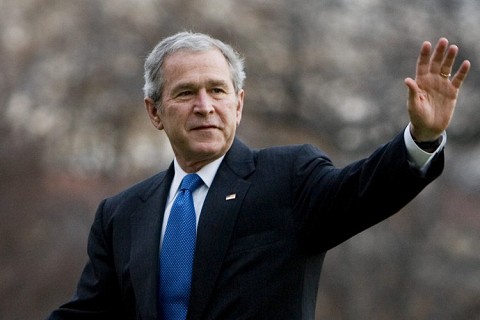 |
While President Bush maintained some distance from the torture for years -- Cheney describes him "basically" authorizing it -- he served as the chief propagandist about its efficacy and necessity. Most notably, on Sept. 6, 2006, when Bush first confessed to the program, Bush repeated the claims made to support the Bybee Two memo: that Abu Zubaydah wouldn't talk except by using torture. And in 2006, after the CIA's own inspector general had raised problems with the program, after Steven Bradbury had admitted all the ways that the torture program exceeded guidelines, Bush still claimed it was legal. "[They] were designed to be safe, to comply with our laws, our Constitution and our treaty obligations. The Department of Justice reviewed the authorized methods extensively, and determined them to be lawful." With this statement, the deceptions and bureaucratic games all came full circle. After all, it was Bush who, on Feb. 7, 2002, had declared the Geneva Conventions wouldn't apply (a view the Supreme Court ultimately rejected). Bush's inaction in torture is as important as his actions .. (he) failed to fulfill legal obligations to notify Congress of the torture program. A Senate Intelligence timeline on the torture program makes clear that Congress was not briefed on the techniques used in the torture program .. then House Intelligence ranking member Jane Harman shows that she had not yet seen evidence that Bush had signed off on this policy. This suggests President Bush did not provide the legally required notice to Congress, violating National Security Decisions Directive-286. What Bush did not say is as legally important as what he did say. |
Yet, ultimately, Bush and whatever approval he gave the program is at the center of the administration's embrace of torture. Condoleezza Rice recently said, "By definition, if it was authorized by the president, it did not violate our obligations in the Convention Against Torture." While Rice has tried to reframe her statement, it uses the same logic used by John Yoo and David Addington to justify the program, the shocking claim that international and domestic laws cannot bind the president in times of war.
Bush's close allies still insist if he authorized it, it couldn't be torture.
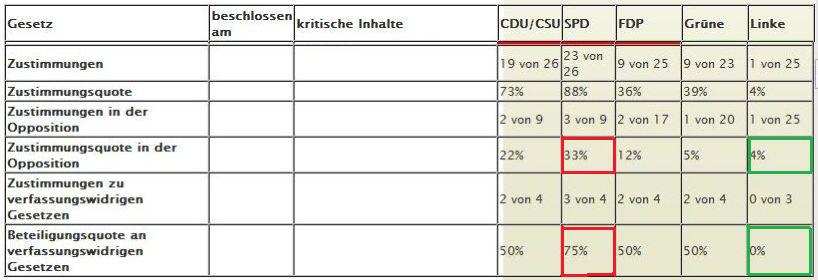
stellen sich als die einzigen heraus, die noch nicht einmal(!) einem verfassungswidrigen Gesetz zugestimmt haben
- die am lautesten schreien:
SPD voran & CDU gleich hinterher
- sind diejenigen, die den größten Mist verzapft haben ....
Und es wahrscheinlich, nein, sicherlich, wieder tun werden!
Deswegen:
Keine Stimme für Parteien die das Grundgesetz auszuhöhlen trachten ....
Die 'story' ....
Ich bin nächstens zu einer Feier eingeladen. Erfreulich ist daran, daß da viele Menschen zusammenkommen die ich schätze und mit denen ich gern zusammen bin. Unerfreulich ist, daß die Feier mit (mindestens) einem Kirchgang verbunden ist.
Ich stehe in dem Zwiespalt mich durch den 'Gottesdienst' in eine Situation zu begeben in der ich den Schein wahren muß obwohl ich lieber die Wahrheit leben würde, also nicht teilzunehmen, dem fernzubleiben.
Kirche - und die dazugehörige 'Ideologie' - ist ein Versprechen an Menschen das nicht gehalten werden kann. Mindestens bin ich davon überzeugt. Was Kirche verspricht ist ein Leben nach dem Tode - für das es aus meiner Überzeugung keine Beweise gibt und das ich daher für eine gigantische Irreführung halte.
Nun ist die Frage die ich mir stelle etwa so:
Soll ich der Tradition folgen und der Diskussion um meine Einstellung ausweichen?
Oder soll ich mich so verhalten wie es meiner Überzeugung entspricht und mich von der - sinnlosen - Zeremonie fernhalten?
Noch habe ich ja etwas Zeit.
Das ist gut so.
Ändert aber nichts daran, daß es irgendwann entschieden werden muß.
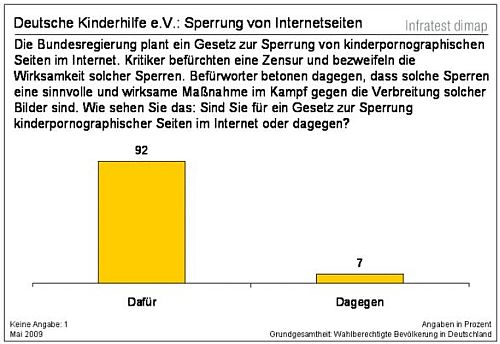
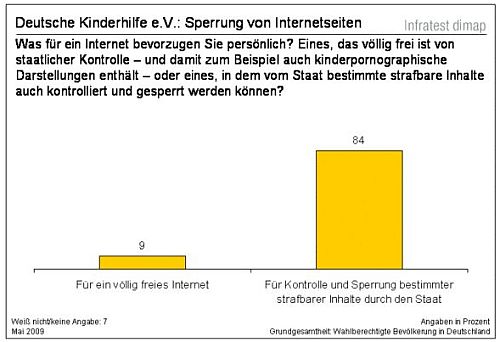
"92% der Deutschen für Kinderporno-Sperre"
(- warum nicht gleich 100%!?)
Hier werden mehrere wesentliche Tatsachen deutlich:
*edit* (18.05.09 / 02:00h)
A [Zitat] “The most dangerous man, to any government, is the man who is able to think things out for himself… Almost inevitably, he comes to the conclusion that the government he lives under is dishonest, insane and intolerable.” (H.L. Mencken American Writer 1880-1956)
B Siehe dazu auch: "Zukunft mit Komplementärmedizin" - die Dummen sterben nicht aus!
C Siehe dazu auch: Die Tyrannei des Guten
D Siehe dazu auch: "Recht haben, aber keinen Einfluss"
E Siehe dazu die farbig unterlegten Kästen in "Recht haben, aber keinen Einfluss"
*edit* (18.05.09 / 22:00h)
Bei fefe fand ich einen Link zu den Umfragetexten - wie erwartet ist eine "führende" Fragestellung gewählt worden, damit steht von vornherein der Ausgang fest: Wer wäre schon "für Kinderpornographie"? - hier als Abbildung
So einfach ist das in der Politik, sogar der sicher nicht mit überragender Intelligenz ausgestattete George W. Bush hat es verstanden:
*[Zitat]
Filter-Experte: "IP-Sperrungen sind Aktionismus". Den technischen Hintergrund erklärt der Informatiker Stefan Köpsell, .. JAP:
"Es ist eigentlich die Regel, dass bei Hosting-Providern auf einem Server ganz unterschiedliche Seiten mit eigenen URLs liegen."
Die Folge: Alle haben dieselbe IP-Adresse, aber meist ganz unterschiedliche Inhalte und Anbieter.
Die Folge laut Köpsell: "Deshalb sperrt jeder Provider, der anhand von IP-Adressen filtert, auch potentiell harmlose Angebote mit." Experte Köpsell beurteilt die Methode kritisch: "Ich halte IP-Sperrungen für Aktionismus. Man tut etwas, um etwas zu tun, nicht weil es wirksam ist."
Dagegen spricht zum einen, dass auch harmlose Seiten betroffen sind. Zum anderen blockieren IP-Filter überhaupt nicht zuverlässig, was sie sperren sollten. Köpsell: "Wer eine Seite erreichen will, schafft das über Anonymisierungsdienste wie JAP problemlos." Außerdem kämpfen insbesondere Anbieter von Pornoseiten ständig gegen Filterversuche. Köpsell: "Natürlich ändern Anbieter die IP-Adressen ihrer Angebote, wenn ihnen eine Sperrung weh tut. Solche Filterversuche werden schnell zum Katz-und-Maus-Spiel zwischen Providern und Anbietern."